Friday, August 19, 2011
Discussion Group Summary: Carbon Tax
Thursday, August 18, 2011
UWA Extension Course open for enrolment now!
The Bluestocking Institute is offering the course "Globalisation: Another World Is Possible?" via UWA Extensions, on Wed nights for 4 wks starting October 5th. Enrolments are now open at http://www.extension.uwa.edu.au/course/cc113. All welcome!
Globalisation : Another World Is Possible?
The course, “Globalisation: Another world is possible”, seeks to give participants a deeper understanding of globalisation. From the anti-globalisation protests in Seattle to the role of Wiki leaks in the recent Egyptian uprising, we ask: How is globalisation changing the world, and how does this affect our everyday lives?
The course is composed of four weekly, two-hour sessions that will investigate globalisation’s various faces; from the rise of terrorism and the role of the internet, to the infiltration of Coke and McDonalds to the four corners of the globe. The course will include an overview of the major issues and debates, with some real life accounts and examples of globalisation in action. Each session will end with a casual group discussion around some tea and snacks, where participants are encouraged to explore and share their ideas.
Week 1: The Global Economy
Week 2: The Environment
Week 3: New Media
Week 4: The Future of a Globalised World
Presented by: Sky Croeser, Kelly Gerard and Michelle Hackett
Location: UWA Extensions, Claremont, WA
Thursday, August 4, 2011
Call for Submissions from the International Museum of Women
Submit Your Work Now for the Next Online Exhibition of the International Museum of Women (IMOW)!
Published Submissions Eligible for a US$1,000 Community Choice Award
Artists, filmmakers, photographers, musicians, writers—IMOW is now accepting submissions of any media type for our new online exhibition, Your Voices: On Motherhood. Contributions can come in any medium that is currently supported on IMOW.org and work must address a topic related to motherhood. Published submissions will be eligible for a US$1,000 Community Choice Award, with $500 going to the individual contributor and $500 going to a women’s nonprofit of the winner’s choice!
IMOW wants to showcase the experiences, ideas, joys and challenges of a new global generation on motherhood. What are your fears and hopes as you think about whether to become a mother? How is being a ‘good’ mother defined in your country or culture? How is mothering now different to your mother or grandmother’s generation? Tell us your story and submit your work today!
For more information and submissions guidelines click here
Saturday, July 23, 2011
Discussion Group: Carbon Tax
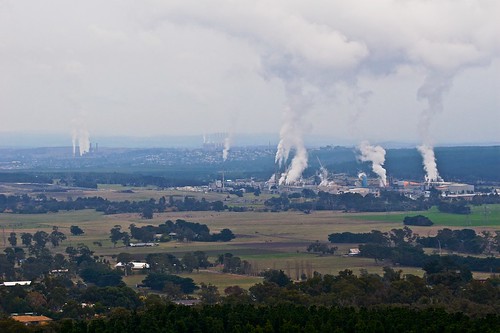
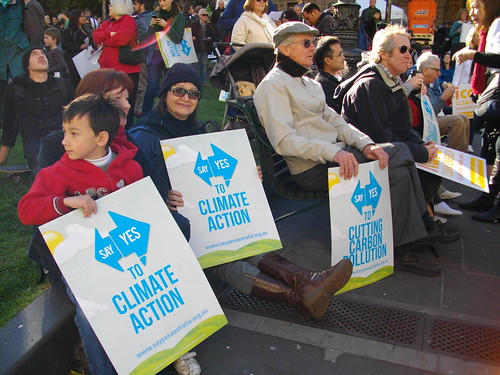
We'll talk through some of the issues surrounding the carbon tax, including how it will work, it's potential effect on households and the economy, and how the tax has been covered in the media.
If you'd like to do some reading before you come along, here are some resources:
* The ABC has a number of infographics that show key figures, effects on food prices, how carbon pricing works, which areas emissions will be cut from, effects on income and the economy, Australia's current emission levels, and a short overview of different approaches to cutting emissions.
* The Australian government has released a site that will allow you to estimate the effects on your household. Why not try it out?
* The Drum's Ben Eltham takes a closer look at the main alternative being proposed: the Coalition's Direct Action Plan.
* In the wake of the government's announcement, different groups are trying to shape how Australians react: a new industry lobby group has been formed to oppose the tax, Crikey's Andrew Crook claims that the Daily Telegraph's coverage is biased, and GetUp! is trying to crowd source funding for their own ads.
Of course, you're also very welcome to show up without reading these resources, or to do reading of your own.
Meet us at the Moon Cafe at 5pm, Sunday 14th August. You can RSVP through the Facebook event page or just come along.
Thursday, July 21, 2011
My Freegan Results
I live on my own and I've been struggling to get through all the food we harvested. I had breakfast off of bakery goods for the first half of my week (so unhealthy, so yum), and fruit and toast for the remainder, all dredged up from the depths of Thrown Out By Other People. Tomorrow I'll have two of the eggs we salvaged on toast, and I'm looking forward to it!
For lunch this week I made vegan peanut satay soup:
Pumpkin (freegan)
Carrot (freegan)
Potato (freegan)
Red chili (freegan)
Garlic and onion
Lemon (backyard; does that count as freegan?)
Coconut milk
Cumin and fresh tumeric
Peanut butter
Vegetable stock
Rolls for dipping (freegan)
I have to pat myself on the back. It's pretty stellar soup.
Tonight I'm making:
Capsicum (freegan) stuffed with kangaroo (NOT freegan, or vegan, or anything but yummy and already in my freezer), bread crumbs (freegan), tomato (freegan), garlic, and mushrooms
Steamed beans (freegan), snow peas (freegan), and leeks doused in dill-lemon butter
And just to make it especially un-hippy, I'll even add the dairy product of grilled Haloumi.
I've also been working my way through pineapple, pears, and apples. All in all, I am a total freegan convert. We are planning run #2 sometime next week. If you are curious, get in touch with me!
Monday, July 18, 2011
Freegan run number one
Our haul amounted to mostly fresh produce from a Sunday market, pretty much all bruised, starting to go off, or otherwise "damaged goods". We liked them perfectly fine, however, and anything that was too far gone even to be reclaimed by hungry hungry hippies went to a separate box for the chooks.
Although we weren't as green as we would have liked (in that we had a car and drove from site to site), it turned out to be essential for the sheer amount of stuff we had, most of which we sorted into cardboard flats also taken from the dumpster. We had all thoughtfully brought lots of those little fruit and veg bags for putting loose rolls and things in, which turned out nicely when we hit the jackpot of scones, chocolate croissants, and walnut scrolls. Also as individual bread bags for the wholemeal loves we found, baked fresh that day.
Just a light salad: cherry tomatoes and cucumber from the dumpsters, lemon juice from our backyard tree, a splash of balsamic vinegar and salt to taste.
And a lot of other stuff -- a yellow capsicum, a carrot, and a lot of other odds and ends, including the rest of the stewed tomatoes from the risotto -- went into a pot with some water to simmer away into vegetable stock.Saturday, July 16, 2011
Discussion Group Event: The Ban on Live Animal Export
At the last Bluestocking Discussion Group we explored the recent events surrounding live cow export to Indonesia. Video footage by Animals Australia depicting cruelty against cows in Indonesian abattoirs has raised concerns about Australia’s live animal export practices, and led to a temporary ban on the trade. As we discussed last Sunday, this raises interesting and tricky questions about the ethics of live animal export, about the responsibility we should or shouldn’t have over the end use of “goods” we sell (eg uranium, animals), and about the future sustainability of the way we live and eat.
The Australian cattle industry and farmers, the Indonesian meat industry and consumers, the Australian government, and Australian public, all appear to have a stake in the future of live cow export. The media reports in Australia over the last month seem to have been dominated by the concerns of the Australian farmers; primarily, the frustration of farmers with the uncertainty surrounding their industry. Whilst the ban on live exports has since been lifted, there are now strict conditions over the exportation of cows to Indonesia. It is the Australian exporter who is now required to account for each cow that is transported to Indonesia- from the moment they buy the cow in Australia, to the moment it is killed in the abattoir in Indonesia. This can be a process which takes several months, as the Indonesian government is trying to enhance its own livestock-feed industry by “fattening-up” the cows in their own fields, before slaughter.
We discussed the question of whether it is simply easiest, and more humane, to stop live export of the cows altogether. There are a few reasons why this would be tricky: one reason is the livestock-feed industry that Indonesia wants to continue to build; another reason is the halal standards that Indonesia wants to ensure are met; another reason is the lack of refrigeration in much of Indonesia, making fresh meat the safest choice. In terms of the Islamic halal standards, we do have halal butchers in Australia, but there is some difference of opinions over whether stunning is acceptable under halal guidelines. In order for meat to be halal the cow must be killed in a specific way. In Australia, nonlethal stunning before proper slaughter is accepted as halal. This practice is not universally accepted, however, and hence international standards do not include stunning. The Australian government requires exporters to ensure that Indonesian abattoirs are up to international standards for cow slaughter. Unsurprising, this has not been deemed sufficient by animal welfare groups.
Finally, our discussion led us to question the animal welfare standards in domestic industries here in Australia. While the plight of cows and sheep abroad is most certainly an area of concern, it can be seen as hypocritical to chastise Indonesia for its bad animal welfare record when caged chicken (among other issues) are still a legal industry in Australia. Hopefully the live cow export media blitz will help to raise community awareness of the animal welfare problems we have here at home.
For further information on any of the above, post up a blog with your questions and I’ll do my best to research an answer. Some interesting sources are pasted below.
- RSPCA: What is halal slaughter in Australia?
- Australian government’s “action on live exports” website
- Australian standards for the export of livestock
- Banliveexport.com: Animals Australia and the RSPCA website promoting the ban on live animal exports
- ABC News report ‘Graziers count cost of live export ban'